Mixed numbers are a fundamental concept in mathematics, representing a combination of a whole number and a fraction. For instance, 3 1/2 is a mixed number where 3 is the whole number and 1/2 is the fraction. Understanding how to work with mixed numbers is crucial for solving various mathematical problems, including subtraction. Subtracting mixed numbers can seem daunting at first, but with the right approach and practice, it becomes straightforward.
The process of subtracting mixed numbers involves converting the mixed numbers into improper fractions, then performing the subtraction. This might require finding a common denominator if the fractions have different denominators. After subtraction, the result can be converted back into a mixed number if necessary. However, mastering this process requires practice, and that’s where subtracting mixed numbers worksheets come into play. These worksheets provide a comprehensive set of problems to help learners grasp the concept and apply it with confidence.
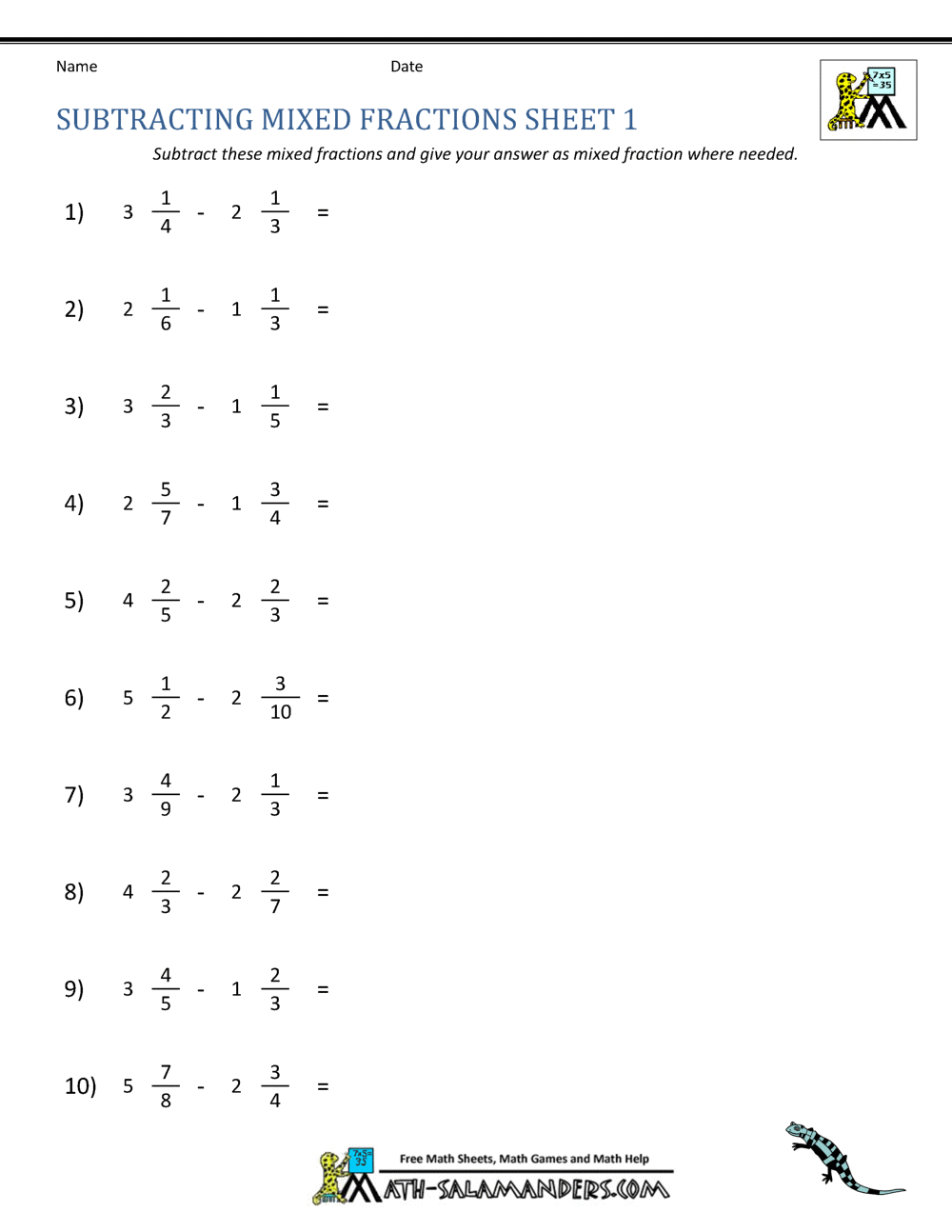
Subtracting Fractions Worksheets
Understanding Mixed Numbers
To understand mixed numbers, it’s essential to break them down into their components: the whole number part and the fractional part. The whole number part represents complete units, while the fractional part represents a portion of a unit. For example, in the mixed number 2 3/4, the whole number part is 2, and the fractional part is 3/4. Understanding this distinction is key to successfully subtracting mixed numbers, as it allows for the conversion into improper fractions, which can then be subtracted using standard fraction subtraction rules.
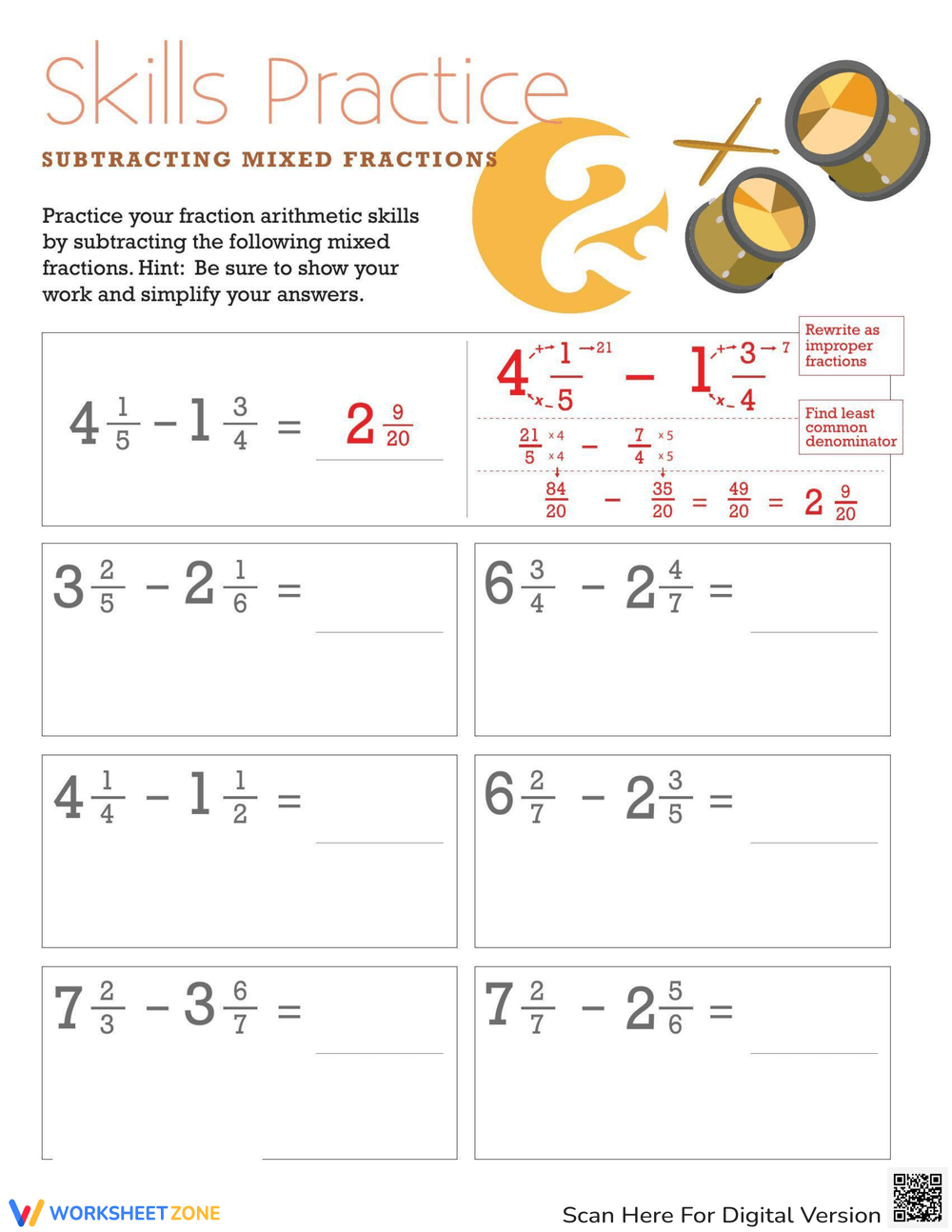
Printable Subtracting Mixed Numbers Worksheets
Subtracting Mixed Numbers: A Step-by-Step Guide
Subtracting mixed numbers is a straightforward process once the initial steps are mastered. The first step is to convert each mixed number into an improper fraction. This is done by multiplying the whole number part by the denominator and then adding the numerator. For example, to convert 2 3/4 into an improper fraction, you multiply 2 by 4 (getting 8), then add 3, resulting in 11/4. After converting both numbers, find a common denominator if necessary, subtract the fractions, and then convert the result back into a mixed number if it’s an improper fraction.
Common Challenges and Solutions
One of the common challenges when subtracting mixed numbers is ensuring that the fractions have a common denominator before performing the subtraction. This step is crucial because it allows for a direct comparison and subtraction of the fractions. Another challenge is converting the result back into a mixed number after subtraction, which requires understanding how to divide the numerator by the denominator and finding the remainder. Practice worksheets are invaluable in overcoming these challenges, as they provide numerous examples and help build confidence and proficiency.
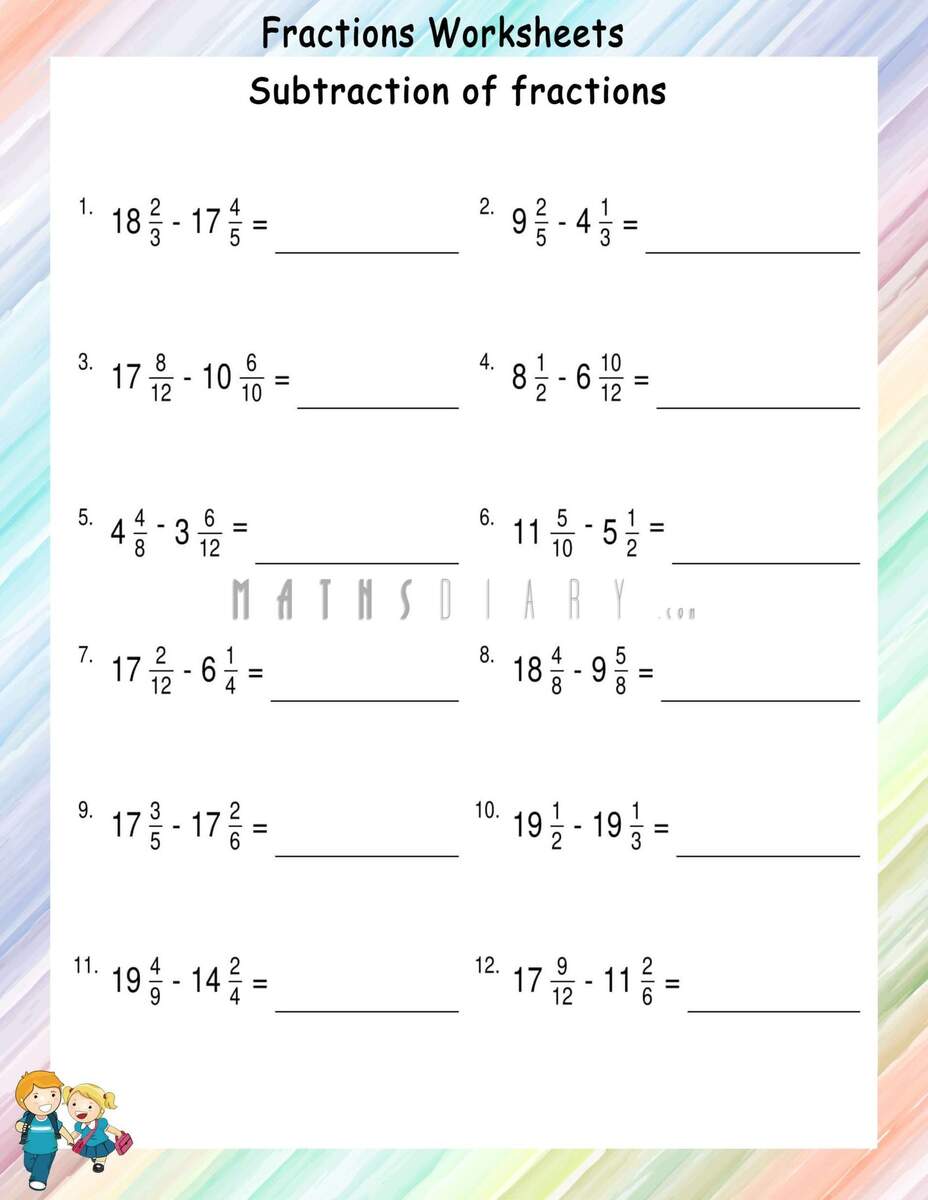
Subtraction Of Mixed Fractions Worksheets Math Worksheets MathsDiary
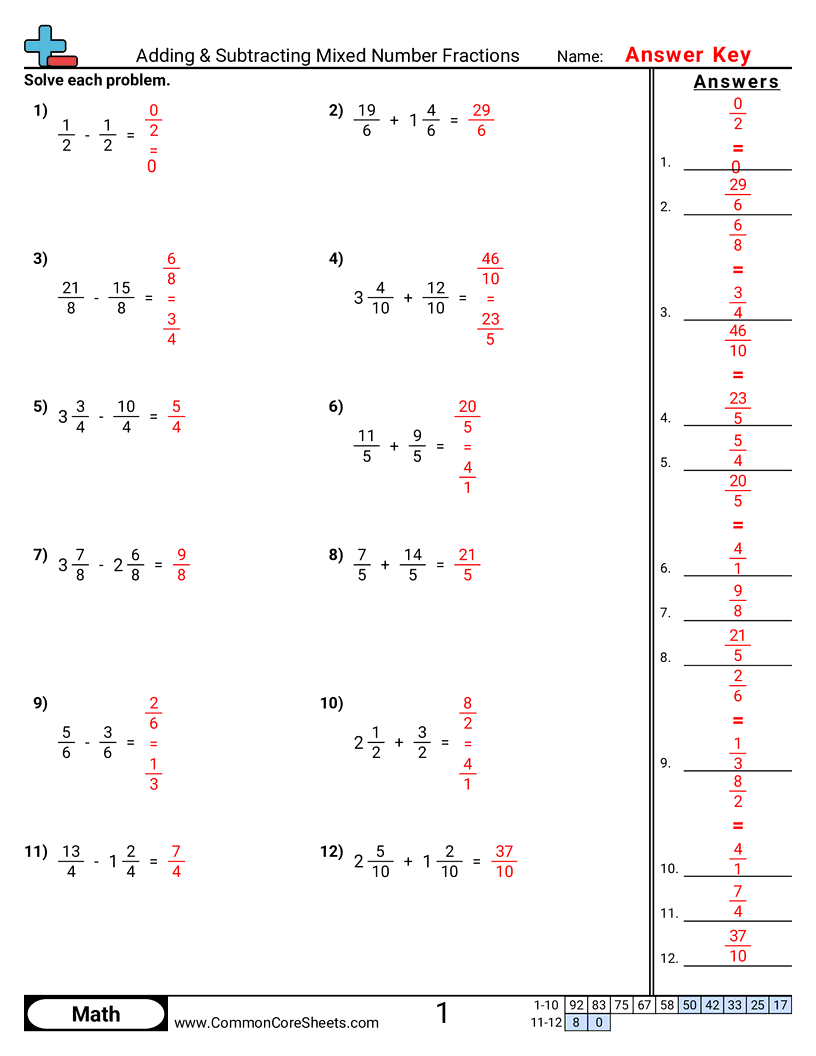
Adding Subtracting Mixed Number Fractions Worksheet Download
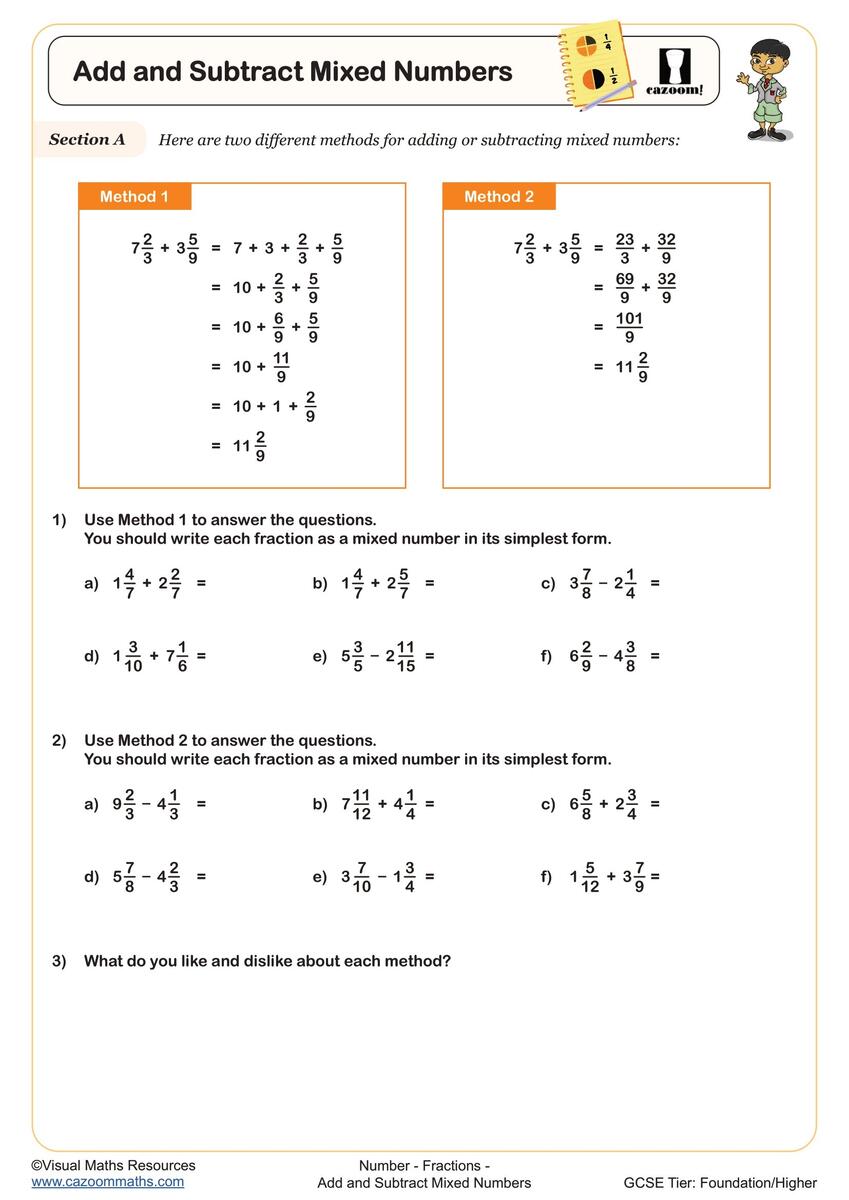
Add And Subtract Mixed Numbers Worksheet Printable PDF For Year 8 Year 9 And Year 10 Number Worksheet